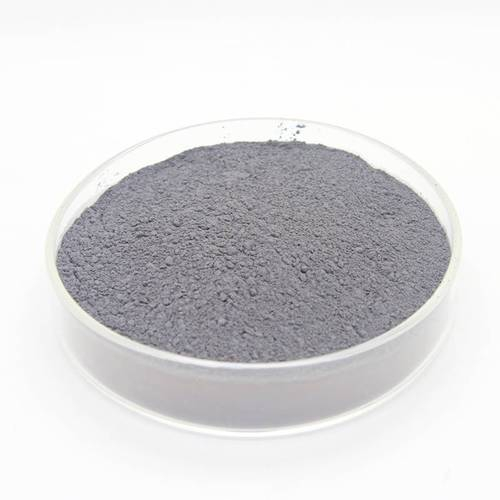
Tungsten disulfide (WS2) is a shift steel sulfide compound coming from the family members of two-dimensional change steel sulfides (TMDs). It has a straight bandgap and is suitable for optoelectronic and electronic applications.

(Tungsten Disulfide)
When graphene and WS2 integrate with van der Waals forces, they develop an unique heterostructure. In this structure, there is no covalent bond between the two materials, yet they communicate via weak van der Waals pressures, which means they can preserve their original electronic homes while exhibiting brand-new physical phenomena. This electron transfer process is essential for the advancement of new optoelectronic gadgets, such as photodetectors, solar cells, and light-emitting diodes (LEDs). On top of that, coupling effects may also produce excitons (electron hole pairs), which is essential for researching condensed issue physics and creating exciton based optoelectronic devices.
Tungsten disulfide plays a key function in such heterostructures
Light absorption and exciton generation: Tungsten disulfide has a direct bandgap, specifically in its single-layer form, making it a reliable light soaking up representative. When WS2 absorbs photons, it can produce exciton bound electron hole pairs, which are important for the photoelectric conversion procedure.
Provider separation: Under lighting problems, excitons created in WS2 can be disintegrated into cost-free electrons and holes. In heterostructures, these cost service providers can be carried to various materials, such as graphene, because of the power degree difference between graphene and WS2. Graphene, as a great electron transport channel, can advertise fast electron transfer, while WS2 adds to the accumulation of openings.
Band Engineering: The band framework of tungsten disulfide relative to the Fermi degree of graphene establishes the instructions and efficiency of electron and hole transfer at the user interface. By readjusting the product density, strain, or external electric area, band alignment can be regulated to enhance the splitting up and transportation of fee providers.
Optoelectronic detection and conversion: This sort of heterostructure can be made use of to construct high-performance photodetectors and solar batteries, as they can efficiently convert optical signals right into electric signals. The photosensitivity of WS2 incorporated with the high conductivity of graphene gives such devices high level of sensitivity and quick reaction time.
Luminescence features: When electrons and openings recombine in WS2, light emission can be created, making WS2 a prospective material for making light-emitting diodes (LEDs) and various other light-emitting gadgets. The visibility of graphene can improve the performance of fee shot, therefore boosting luminescence performance.
Logic and storage applications: Due to the complementary residential or commercial properties of WS2 and graphene, their heterostructures can likewise be put on the design of logic gateways and storage cells, where WS2 supplies the essential changing function and graphene provides a good existing path.
The duty of tungsten disulfide in these heterostructures is typically as a light absorbing medium, exciton generator, and crucial element in band engineering, integrated with the high electron wheelchair and conductivity of graphene, collectively promoting the advancement of new digital and optoelectronic tools.
Supplier
Metalinchina is a trusted global chemical material supplier & manufacturer with over 12 years experience in providing super high-quality metals and metal alloy. The company export to many countries, such as USA, Canada,Europe,UAE,South Africa, etc. As a leading nanotechnology development manufacturer, Metalinchina dominates the market. Our professional work team provides perfect solutions to help improve the efficiency of various industries, create value, and easily cope with various challenges. If you are looking for 304 stainless steel, please send an email to: nanotrun@yahoo.com
Inquiry us
Related Posts

The Indestructible Vessel: The Alumina Ceramic Crucible Legacy alpha alumina
Intro: The Crucible of Production In the realm of materials science, where the alchemy of warmth transforms base components into the building...
Read out all
The Elemental Bond: The Molybdenum Disulfide Revolution molybdenum disulfide powder
Intro: The Smooth Frontier In the high-stakes movie theater of modern industry, where metal grinds against metal and warm intimidates to take...
Read out all
The Molecular Revolution: Redefining Performance with Advanced Plasticiser admixture waterproofing
Intro: The Scientific Research of Circulation In the substantial and requiring landscape of modern-day construction, where structural stability meets building aspiration, there...
Read out all
The Molecular Revolution: Redefining Performance with Advanced Plasticiser admixture waterproofing
Introduction: The Science of Flow In the large and demanding landscape of modern-day building, where architectural honesty fulfills building aspiration, there exists...
Read out all
Why Boron Nitride Ceramic Is Ideal for Crucibles in Strontium Barium Niobate Crystal Growth
Boron nitride ceramic has become the top choice for crucibles used in growing strontium barium niobate crystals. This material stands out because...
Read out all
What Are the Boron Nitride Ceramic Applications in High Temperature Globe Control Valves
Boron nitride ceramic is now being used in high temperature globe control valves. This material brings strong performance where heat and pressure...
Read out all