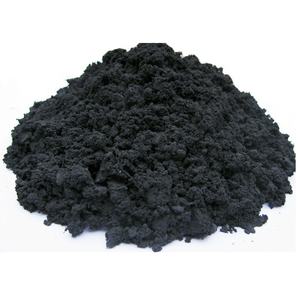
When speaking about graphene, we need to first state the natural mineral graphite that is commonly existing in our daily life.
As an allotrope of carbon, graphite is a layered product, and the carbon atoms inside graphite are organized layer by layer. Carbon atoms in the same layer “hold hands” and are carefully attached, however the mix of carbon atoms between various layers is loose, like a stack of playing cards. With a gentle press, the cards will glide apart.

(Graphene Powder)
From the viewpoint of chemical structure, graphite is a transitional crystal between atomic crystals, metal crystals and molecular crystals. In the crystal, carbon atoms in the exact same layer type covalent bonds with sp2 hybridization, each carbon atom is linked to 3 other carbon atoms, and 6 carbon atoms form a regular hexagonal ring on the very same airplane, extending to form a sheet framework.
If graphite is a stack of playing cards, after that graphene is among the cards in this pile of playing cards. Graphene is a two-dimensional material made up of a single layer of carbon atoms. Stacking graphene layer by layer is graphite. A 1 mm thick graphite includes about 3 million layers of graphene.
Although graphene exists in nature, it is hard to peel off a solitary layer structure.
Greater than twenty years earlier, Andre Geim and Konstantin Novoselov, scientists at the University of Manchester in the UK, thought that there need to be a way to get a solitary layer of graphite.
Just how can a solitary layer of graphite be peeled off? Researchers took a very “simple and crude” method – sticking it with tape.
“Similar to when we create a typo on paper, we will stick the typo with tape.” Based on this, researchers strongly associate that if tape can adhere to the surface area of paper, can it additionally stay with layers of graphite?
( TRUNNANO Graphenen Powder)
In the experiment, researchers stuck both sides of pyrolytic graphite flakes to an unique tape, and detached the tape, the graphite sheet was divided right into two. Although the thickness of graphite at this time is still much from that of a solitary layer of graphite, scientists have actually verified the feasibility of this method – each time the tape is made use of, the graphite comes to be thinner. By demanding using this “mechanical peeling technique” to repeat the procedure, they ultimately acquired a thin sheet consisting of only one layer of carbon atoms, which is graphene.
However, this method of continuously scrubing graphite sheets with tape to get graphene has reduced production performance and can just be utilized to prepare micron-thick graphene, and can not be mass-produced industrially.
Later, with the enhancement of scientific and technological levels, the prep work approach of graphene has additionally made fantastic progress. Currently, in addition to this traditional physical and mechanical exfoliation method, there are likewise many approaches for preparing graphene, such as redox method, solvent exfoliation method, chemical vapor deposition, and so on
Vendor of Graphene
TRUNNANO is a supplier of 3D Printing Materials with over 12 years experience in nano-building energy conservation and nanotechnology development. It accepts payment via Credit Card, T/T, West Union and Paypal. Trunnano will ship the goods to customers overseas through FedEx, DHL, by air, or by sea. If you want to know more about , please feel free to contact us and send an inquiry.
Inquiry us
Related Posts

The Indestructible Vessel: The Alumina Ceramic Crucible Legacy alpha alumina
Intro: The Crucible of Production In the realm of materials science, where the alchemy of warmth transforms base components into the building...
Read out all
The Elemental Bond: The Molybdenum Disulfide Revolution molybdenum disulfide powder
Intro: The Smooth Frontier In the high-stakes movie theater of modern industry, where metal grinds against metal and warm intimidates to take...
Read out all
The Molecular Revolution: Redefining Performance with Advanced Plasticiser admixture waterproofing
Intro: The Scientific Research of Circulation In the substantial and requiring landscape of modern-day construction, where structural stability meets building aspiration, there...
Read out all
The Molecular Revolution: Redefining Performance with Advanced Plasticiser admixture waterproofing
Introduction: The Science of Flow In the large and demanding landscape of modern-day building, where architectural honesty fulfills building aspiration, there exists...
Read out all
Why Boron Nitride Ceramic Is Ideal for Crucibles in Strontium Barium Niobate Crystal Growth
Boron nitride ceramic has become the top choice for crucibles used in growing strontium barium niobate crystals. This material stands out because...
Read out all
What Are the Boron Nitride Ceramic Applications in High Temperature Globe Control Valves
Boron nitride ceramic is now being used in high temperature globe control valves. This material brings strong performance where heat and pressure...
Read out all