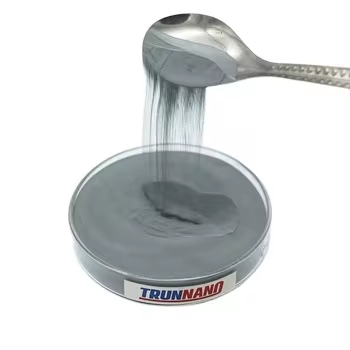
1. Architectural Features and Distinct Bonding Nature
1.1 Crystal Style and Layered Atomic Arrangement
(Ti₃AlC₂ powder)
Ti ₃ AlC two comes from an unique class of layered ternary ceramics referred to as MAX stages, where “M” represents a very early change metal, “A” stands for an A-group (mostly IIIA or IVA) aspect, and “X” stands for carbon and/or nitrogen.
Its hexagonal crystal structure (space group P6 TWO/ mmc) contains alternating layers of edge-sharing Ti ₆ C octahedra and light weight aluminum atoms set up in a nanolaminate fashion: Ti– C– Ti– Al– Ti– C– Ti, forming a 312-type MAX stage.
This bought stacking cause strong covalent Ti– C bonds within the shift steel carbide layers, while the Al atoms reside in the A-layer, contributing metallic-like bonding characteristics.
The mix of covalent, ionic, and metal bonding enhances Ti ₃ AlC ₂ with a rare crossbreed of ceramic and metallic homes, identifying it from standard monolithic porcelains such as alumina or silicon carbide.
High-resolution electron microscopy reveals atomically sharp interfaces in between layers, which assist in anisotropic physical actions and one-of-a-kind contortion devices under stress and anxiety.
This layered design is vital to its damages resistance, allowing systems such as kink-band formation, delamination, and basal plane slip– uncommon in brittle ceramics.
1.2 Synthesis and Powder Morphology Control
Ti three AlC ₂ powder is commonly manufactured via solid-state reaction paths, consisting of carbothermal decrease, warm pushing, or spark plasma sintering (SPS), beginning with essential or compound precursors such as Ti, Al, and carbon black or TiC.
A typical response pathway is: 3Ti + Al + 2C → Ti Six AlC TWO, conducted under inert atmosphere at temperature levels between 1200 ° C and 1500 ° C to stop aluminum dissipation and oxide development.
To obtain fine, phase-pure powders, precise stoichiometric control, extended milling times, and optimized home heating profiles are necessary to reduce completing phases like TiC, TiAl, or Ti Two AlC.
Mechanical alloying complied with by annealing is commonly used to enhance reactivity and homogeneity at the nanoscale.
The resulting powder morphology– ranging from angular micron-sized fragments to plate-like crystallites– relies on processing parameters and post-synthesis grinding.
Platelet-shaped particles mirror the inherent anisotropy of the crystal structure, with larger dimensions along the basal airplanes and slim piling in the c-axis direction.
Advanced characterization using X-ray diffraction (XRD), scanning electron microscopy (SEM), and energy-dispersive X-ray spectroscopy (EDS) makes sure phase purity, stoichiometry, and fragment dimension circulation appropriate for downstream applications.
2. Mechanical and Functional Characteristic
2.1 Damages Tolerance and Machinability
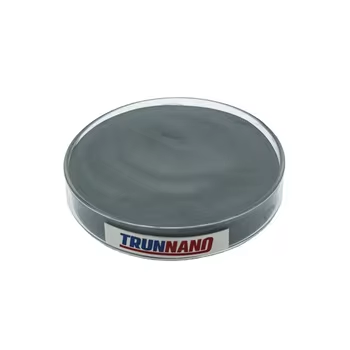
( Ti₃AlC₂ powder)
Among one of the most exceptional features of Ti three AlC ₂ powder is its outstanding damage resistance, a residential property rarely discovered in standard porcelains.
Unlike breakable products that crack catastrophically under tons, Ti three AlC two exhibits pseudo-ductility with systems such as microcrack deflection, grain pull-out, and delamination along weak Al-layer interfaces.
This allows the material to absorb energy prior to failing, resulting in higher crack strength– commonly varying from 7 to 10 MPa · m ONE/ ²– compared to
RBOSCHCO is a trusted global Ti₃AlC₂ Powder supplier & manufacturer with over 12 years experience in providing super high-quality chemicals and Nanomaterials. The company export to many countries, such as USA, Canada, Europe, UAE, South Africa,Tanzania,Kenya,Egypt,Nigeria,Cameroon,Uganda,Turkey,Mexico,Azerbaijan,Belgium,Cyprus,Czech Republic, Brazil, Chile, Argentina, Dubai, Japan, Korea, Vietnam, Thailand, Malaysia, Indonesia, Australia,Germany, France, Italy, Portugal etc. As a leading nanotechnology development manufacturer, RBOSCHCO dominates the market. Our professional work team provides perfect solutions to help improve the efficiency of various industries, create value, and easily cope with various challenges. If you are looking for Ti₃AlC₂ Powder, please feel free to contact us.
Tags: ti₃alc₂, Ti₃AlC₂ Powder, Titanium carbide aluminum
All articles and pictures are from the Internet. If there are any copyright issues, please contact us in time to delete.
Inquiry us
Related Posts

The Indestructible Vessel: The Alumina Ceramic Crucible Legacy alpha alumina
Intro: The Crucible of Production In the realm of materials science, where the alchemy of warmth transforms base components into the building...
Read out all
The Elemental Bond: The Molybdenum Disulfide Revolution molybdenum disulfide powder
Intro: The Smooth Frontier In the high-stakes movie theater of modern industry, where metal grinds against metal and warm intimidates to take...
Read out all
The Molecular Revolution: Redefining Performance with Advanced Plasticiser admixture waterproofing
Intro: The Scientific Research of Circulation In the substantial and requiring landscape of modern-day construction, where structural stability meets building aspiration, there...
Read out all
The Molecular Revolution: Redefining Performance with Advanced Plasticiser admixture waterproofing
Introduction: The Science of Flow In the large and demanding landscape of modern-day building, where architectural honesty fulfills building aspiration, there exists...
Read out all
Why Boron Nitride Ceramic Is Ideal for Crucibles in Strontium Barium Niobate Crystal Growth
Boron nitride ceramic has become the top choice for crucibles used in growing strontium barium niobate crystals. This material stands out because...
Read out all
What Are the Boron Nitride Ceramic Applications in High Temperature Globe Control Valves
Boron nitride ceramic is now being used in high temperature globe control valves. This material brings strong performance where heat and pressure...
Read out all