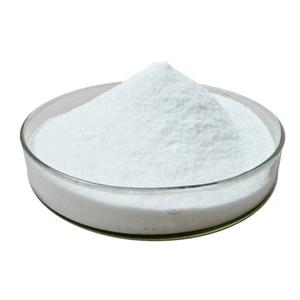
Intro to Oxides: Building Blocks of Nature and Innovation
Oxides– compounds developed by the reaction of oxygen with other components– represent among one of the most varied and essential courses of materials in both natural systems and crafted applications. Found perfectly in the Planet’s crust, oxides work as the foundation for minerals, ceramics, steels, and progressed electronic components. Their buildings differ extensively, from protecting to superconducting, magnetic to catalytic, making them important in fields ranging from energy storage space to aerospace design. As product science presses limits, oxides go to the center of innovation, enabling technologies that specify our modern globe.

(Oxides)
Architectural Diversity and Practical Features of Oxides
Oxides display an amazing variety of crystal structures, including simple binary kinds like alumina (Al ₂ O FIVE) and silica (SiO ₂), complex perovskites such as barium titanate (BaTiO FOUR), and spinel frameworks like magnesium aluminate (MgAl ₂ O ₄). These structural variants trigger a wide range of functional habits, from high thermal security and mechanical firmness to ferroelectricity, piezoelectricity, and ionic conductivity. Understanding and tailoring oxide frameworks at the atomic degree has ended up being a foundation of products design, opening new capabilities in electronic devices, photonics, and quantum tools.
Oxides in Power Technologies: Storage Space, Conversion, and Sustainability
In the global shift towards tidy power, oxides play a central duty in battery modern technology, gas cells, photovoltaics, and hydrogen manufacturing. Lithium-ion batteries depend on split shift metal oxides like LiCoO ₂ and LiNiO two for their high power density and relatively easy to fix intercalation habits. Solid oxide gas cells (SOFCs) use yttria-stabilized zirconia (YSZ) as an oxygen ion conductor to enable effective energy conversion without burning. On the other hand, oxide-based photocatalysts such as TiO TWO and BiVO ₄ are being optimized for solar-driven water splitting, providing a promising course toward lasting hydrogen economic situations.
Electronic and Optical Applications of Oxide Materials
Oxides have actually changed the electronics market by allowing clear conductors, dielectrics, and semiconductors critical for next-generation tools. Indium tin oxide (ITO) continues to be the requirement for clear electrodes in screens and touchscreens, while emerging alternatives like aluminum-doped zinc oxide (AZO) goal to lower dependence on scarce indium. Ferroelectric oxides like lead zirconate titanate (PZT) power actuators and memory devices, while oxide-based thin-film transistors are driving versatile and transparent electronic devices. In optics, nonlinear optical oxides are crucial to laser regularity conversion, imaging, and quantum communication modern technologies.
Role of Oxides in Structural and Protective Coatings
Beyond electronic devices and power, oxides are important in structural and safety applications where severe conditions require phenomenal performance. Alumina and zirconia finishings supply wear resistance and thermal obstacle security in turbine blades, engine components, and reducing tools. Silicon dioxide and boron oxide glasses create the foundation of fiber optics and present modern technologies. In biomedical implants, titanium dioxide layers enhance biocompatibility and deterioration resistance. These applications highlight exactly how oxides not just protect materials yet additionally prolong their functional life in some of the harshest settings understood to design.
Environmental Remediation and Eco-friendly Chemistry Making Use Of Oxides
Oxides are significantly leveraged in environmental management via catalysis, toxin removal, and carbon capture technologies. Metal oxides like MnO ₂, Fe ₂ O TWO, and CeO two serve as stimulants in damaging down volatile organic compounds (VOCs) and nitrogen oxides (NOₓ) in commercial emissions. Zeolitic and mesoporous oxide frameworks are explored for CO two adsorption and separation, supporting initiatives to alleviate climate change. In water therapy, nanostructured TiO two and ZnO use photocatalytic degradation of contaminants, pesticides, and pharmaceutical deposits, showing the potential of oxides beforehand sustainable chemistry techniques.
Difficulties in Synthesis, Security, and Scalability of Advanced Oxides
( Oxides)
Despite their adaptability, establishing high-performance oxide products provides significant technological obstacles. Accurate control over stoichiometry, stage pureness, and microstructure is crucial, specifically for nanoscale or epitaxial films used in microelectronics. Many oxides struggle with bad thermal shock resistance, brittleness, or restricted electrical conductivity unless drugged or crafted at the atomic degree. Furthermore, scaling laboratory developments right into commercial processes commonly needs overcoming price barriers and guaranteeing compatibility with existing manufacturing frameworks. Attending to these issues needs interdisciplinary cooperation across chemistry, physics, and design.
Market Trends and Industrial Need for Oxide-Based Technologies
The global market for oxide materials is expanding rapidly, sustained by growth in electronic devices, renewable resource, defense, and health care markets. Asia-Pacific leads in intake, particularly in China, Japan, and South Korea, where need for semiconductors, flat-panel screens, and electrical vehicles drives oxide advancement. The United States And Canada and Europe maintain strong R&D investments in oxide-based quantum materials, solid-state batteries, and green modern technologies. Strategic partnerships between academic community, start-ups, and international firms are increasing the commercialization of unique oxide services, reshaping sectors and supply chains worldwide.
Future Potential Customers: Oxides in Quantum Computer, AI Hardware, and Beyond
Looking onward, oxides are poised to be foundational products in the following wave of technical changes. Emerging research into oxide heterostructures and two-dimensional oxide interfaces is exposing unique quantum sensations such as topological insulation and superconductivity at area temperature level. These discoveries could redefine computing designs and make it possible for ultra-efficient AI equipment. Furthermore, advances in oxide-based memristors might lead the way for neuromorphic computing systems that mimic the human brain. As researchers continue to unlock the concealed possibility of oxides, they stand all set to power the future of intelligent, sustainable, and high-performance modern technologies.
Distributor
RBOSCHCO is a trusted global chemical material supplier & manufacturer with over 12 years experience in providing super high-quality chemicals and Nanomaterials. The company export to many countries, such as USA, Canada, Europe, UAE, South Africa,Tanzania,Kenya,Egypt,Nigeria,Cameroon,Uganda,Turkey,Mexico,Azerbaijan,Belgium,Cyprus,Czech Republic, Brazil, Chile, Argentina, Dubai, Japan, Korea, Vietnam, Thailand, Malaysia, Indonesia, Australia,Germany, France, Italy, Portugal etc. As a leading nanotechnology development manufacturer, RBOSCHCO dominates the market. Our professional work team provides perfect solutions to help improve the efficiency of various industries, create value, and easily cope with various challenges. If you are looking for calcined alumina, please send an email to: sales1@rboschco.com
Tags: magnesium oxide, zinc oxide, copper oxide
All articles and pictures are from the Internet. If there are any copyright issues, please contact us in time to delete.
Inquiry us
Related Posts

The Indestructible Vessel: The Alumina Ceramic Crucible Legacy alpha alumina
Intro: The Crucible of Production In the realm of materials science, where the alchemy of warmth transforms base components into the building...
Read out all
The Elemental Bond: The Molybdenum Disulfide Revolution molybdenum disulfide powder
Intro: The Smooth Frontier In the high-stakes movie theater of modern industry, where metal grinds against metal and warm intimidates to take...
Read out all
The Molecular Revolution: Redefining Performance with Advanced Plasticiser admixture waterproofing
Intro: The Scientific Research of Circulation In the substantial and requiring landscape of modern-day construction, where structural stability meets building aspiration, there...
Read out all
The Molecular Revolution: Redefining Performance with Advanced Plasticiser admixture waterproofing
Introduction: The Science of Flow In the large and demanding landscape of modern-day building, where architectural honesty fulfills building aspiration, there exists...
Read out all
Why Boron Nitride Ceramic Is Ideal for Crucibles in Strontium Barium Niobate Crystal Growth
Boron nitride ceramic has become the top choice for crucibles used in growing strontium barium niobate crystals. This material stands out because...
Read out all
What Are the Boron Nitride Ceramic Applications in High Temperature Globe Control Valves
Boron nitride ceramic is now being used in high temperature globe control valves. This material brings strong performance where heat and pressure...
Read out all