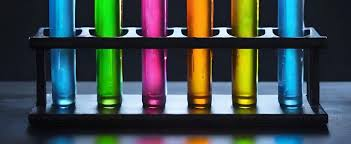
Commonly made use of ingredients in plastic color matching include dispersants, lubricants, diffusion oils, coupling agents, compatibilizers, etc. Commonly come across resin ingredients consist of fire retardants, strengthening agents, brighteners, UV inhibitors, anti-oxidants, antibacterial representatives, antistatic agents, and so on. The most usual ones are fillers for price reduction or physical modification, such as light calcium carbonate, heavy calcium carbonate, talc, mica, kaolin, silica, titanium dioxide, red mud, fly ash, diatomaceous earth, wollastonite, glass beads, barium sulfate, calcium sulfate, and so on, as well as natural fillers, such as wood flour, corn starch, and other agricultural and forestry by-products. Loading and strengthening materials include glass fiber, carbon fiber, asbestos fiber, artificial organic fiber, etc
Suppose the above ingredients are added to the product’s raw materials. In that case, they must be contributed to the material raw materials in the same proportion in the color-matching proofing so as not to generate a color difference in the succeeding manufacturing.

(Additives for Plastic Color Matching)
Dispersant
Dispersant kinds consist of fatty acid polyurea, hydroxy stearate, polyurethane, oligomeric soap, and so on
Currently, the commonly used dispersant in the market is lubricant. Lubes have excellent dispersibility and can likewise boost the fluidness and demolding efficiency of plastics throughout molding.
Lubes are divided into internal lubricating substances and exterior lubes. Internal lubes have a specific compatibility with resins, which can reduce the cohesion in between resin molecular chains, lower melt thickness, and boost fluidity. External lubricants have poor compatibility with resins. They follow the surface area of liquified resins to form a lubricating molecular layer, consequently minimizing the rubbing between materials and handling devices.
Lubricants
According to the chemical structure, they are primarily separated right into hydrocarbons, steel soaps, lubes that play a demolding function, fats, fat amides, and esters.
Such as plastic bis ceramide (EBS)
EBS (Ethylene Bis Stearamide), likewise referred to as vinyl bis stearamide, is a very effective internal and exterior lubricating substance and dispersant extensively utilized in the plastic handling market. It is suitable for all thermoplastic and thermosetting plastics, consisting of however not limited to polyethylene (PE), polypropylene (PP), polystyrene (PS), polycarbonate (PC), polyamide (), polyester (PET/PBT), polyurethane (PU), phenolic material, epoxy resin, etc. Right here are several of the main duties of EBS in these plastics:
(EBS Ethylene Bis Stearamide Emulsion)
Dispersion
As a dispersant, EBS can assist uniformly spread fillers and pigments during plastic processing, prevent cluster, and boost the diffusion and stability of pigments and fillers. This aids enhance the shade uniformity and mechanical properties of the final product. As an example, in masterbatch manufacturing, EBS can ensure that pigment fragments are evenly distributed in the provider resin so that regular color is shown in succeeding plastic products.
Inner lubrication
In the plastic melt, EBS can lower the friction in between molecules and the shear anxiety of the plastic thaw, thus lowering the thaw thickness and making the thaw circulation smoother. This helps in reducing pressure during extrusion or shot molding, reduces processing temperature levels, and reduces molding cycles, while also reducing power intake, enhancing handling effectiveness, and boosting the life span of devices.
Exterior lubrication
EBS forms a thin lubricating film on the plastic surface area, which can decrease the friction between the plastic thaw and the steel mold and mildew, improve demolding efficiency, and prevent sticking of plastic products throughout molding. This not just assists to improve the surface finish of the item and reduce defects however likewise streamlines the post-processing process and boosts production efficiency.
Other functions
In addition to the above major functions, EBS can also be made use of as an antistatic agent to enhance the antistatic buildings of plastic items and minimize issues such as dust adsorption brought on by fixed power. In some applications, EBS can additionally improve the climate resistance and chemical resistance of plastic products.
In the shot molding process, when dry tinting is utilized, surface therapy agents such as white mineral oil and diffusion oil are usually added during blending to play the duty of adsorption, lubrication, diffusion, and demolding. When readjusting the color, it must additionally be included in the raw products symmetrical. First, include the surface treatment representative and tremble well, then add the color powder and shake well.
When choosing, the temperature level resistance of the dispersant should be established according to the molding temperature level of the plastic resources. From a cost viewpoint, in concept, if a medium and low-temperature dispersant can be used, a high-temperature immune one must not be selected. High-temperature dispersants require to be immune to greater than 250 ° C.
Vendor of EBS Ethylene Bis Stearamide Solution
TRUNNANO is a supplier of 3D Printing Materials with over 12 years experience in nano-building energy conservation and nanotechnology development. It accepts payment via Credit Card, T/T, West Union and Paypal. Trunnano will ship the goods to customers overseas through FedEx, DHL, by air, or by sea. If you want to know more about EBS Emulsion, please feel free to contact us and send an inquiry.
Inquiry us
Related Posts

The Indestructible Vessel: The Alumina Ceramic Crucible Legacy alpha alumina
Intro: The Crucible of Production In the realm of materials science, where the alchemy of warmth transforms base components into the building...
Read out all
The Elemental Bond: The Molybdenum Disulfide Revolution molybdenum disulfide powder
Intro: The Smooth Frontier In the high-stakes movie theater of modern industry, where metal grinds against metal and warm intimidates to take...
Read out all
The Molecular Revolution: Redefining Performance with Advanced Plasticiser admixture waterproofing
Intro: The Scientific Research of Circulation In the substantial and requiring landscape of modern-day construction, where structural stability meets building aspiration, there...
Read out all
The Molecular Revolution: Redefining Performance with Advanced Plasticiser admixture waterproofing
Introduction: The Science of Flow In the large and demanding landscape of modern-day building, where architectural honesty fulfills building aspiration, there exists...
Read out all
Why Boron Nitride Ceramic Is Ideal for Crucibles in Strontium Barium Niobate Crystal Growth
Boron nitride ceramic has become the top choice for crucibles used in growing strontium barium niobate crystals. This material stands out because...
Read out all
What Are the Boron Nitride Ceramic Applications in High Temperature Globe Control Valves
Boron nitride ceramic is now being used in high temperature globe control valves. This material brings strong performance where heat and pressure...
Read out all